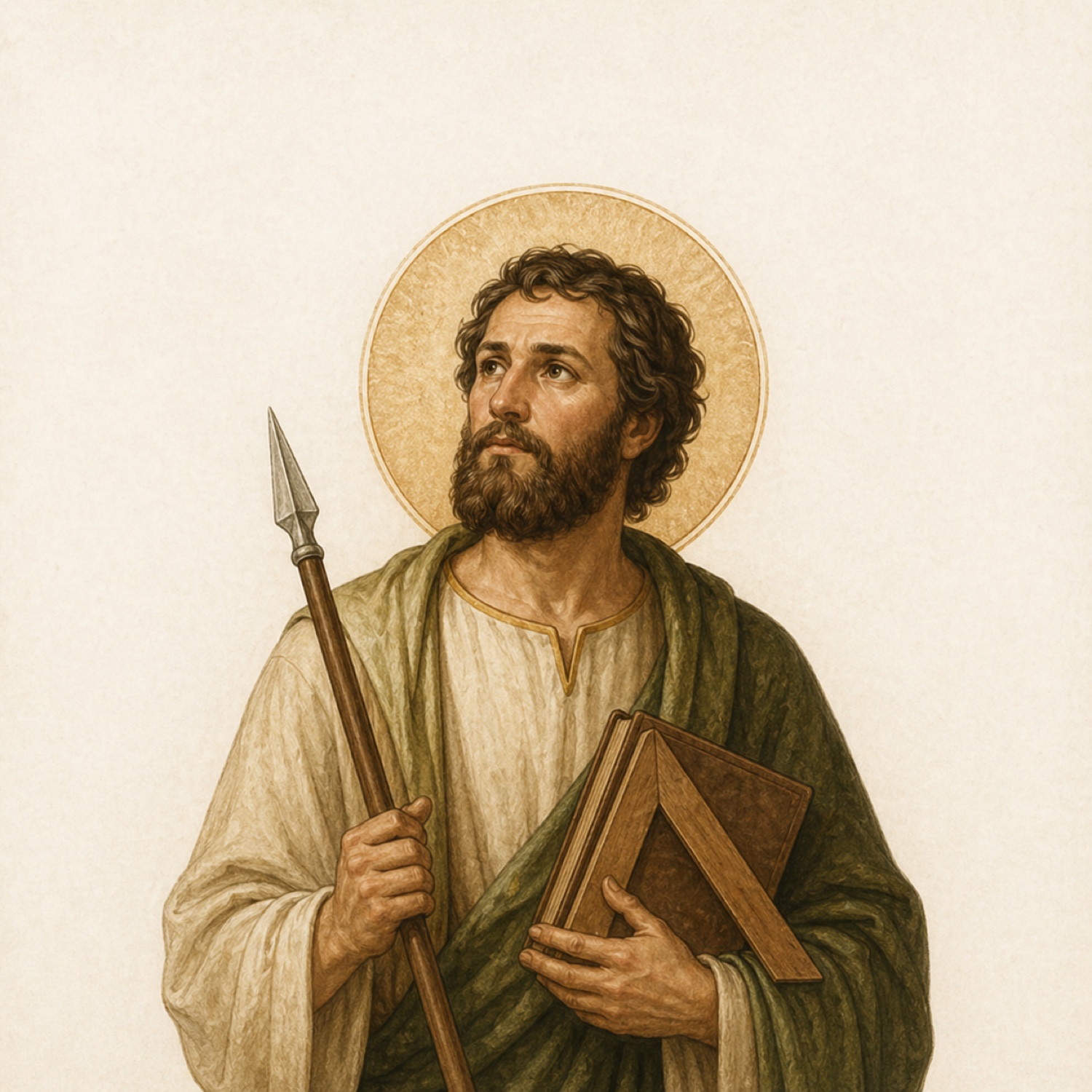
St. Thomas the Apostle
Apostle, Patron of India
1st century
Called Didymus, "the twin" — and remembered above all for his refusal to believe the resurrection on hearsay, and the moment a week later when the Risen Christ stood before him and invited him to put his fingers in the wounds. "My Lord and my God," Thomas answered, the highest profession of Christ's divinity in the Gospels. Tradition has him sailing on to India, where the Mar Thoma Christians of Kerala trace their origin to his preaching.
Before the famous scene of doubt, John's Gospel gives us glimpses of a courageous, blunt-spoken disciple. When Jesus resolved to return to Judea to raise Lazarus, knowing the authorities wanted him dead, it was Thomas who said to the other disciples, "Let us also go, that we may die with him." At the Last Supper he interrupted Jesus' farewell discourse with the honest confession, "Lord, we do not know where you are going; how can we know the way?"
Ancient tradition holds that Thomas traveled farther than any other apostle, carrying the Gospel east through Persia and into India, where he is said to have been martyred near Madras around the year 72. The Christians of Kerala — among the oldest Christian communities in the world — venerate him as their founder. His legacy is the paradox of faith born from doubt: blessed are those who have not seen and yet believe, but it was Thomas who, having seen, gave the Church its most direct declaration of who Jesus is.
Sources

Metanoia
A quiet daily companion that takes today's Mass readings and reflects them back through what you're actually living.