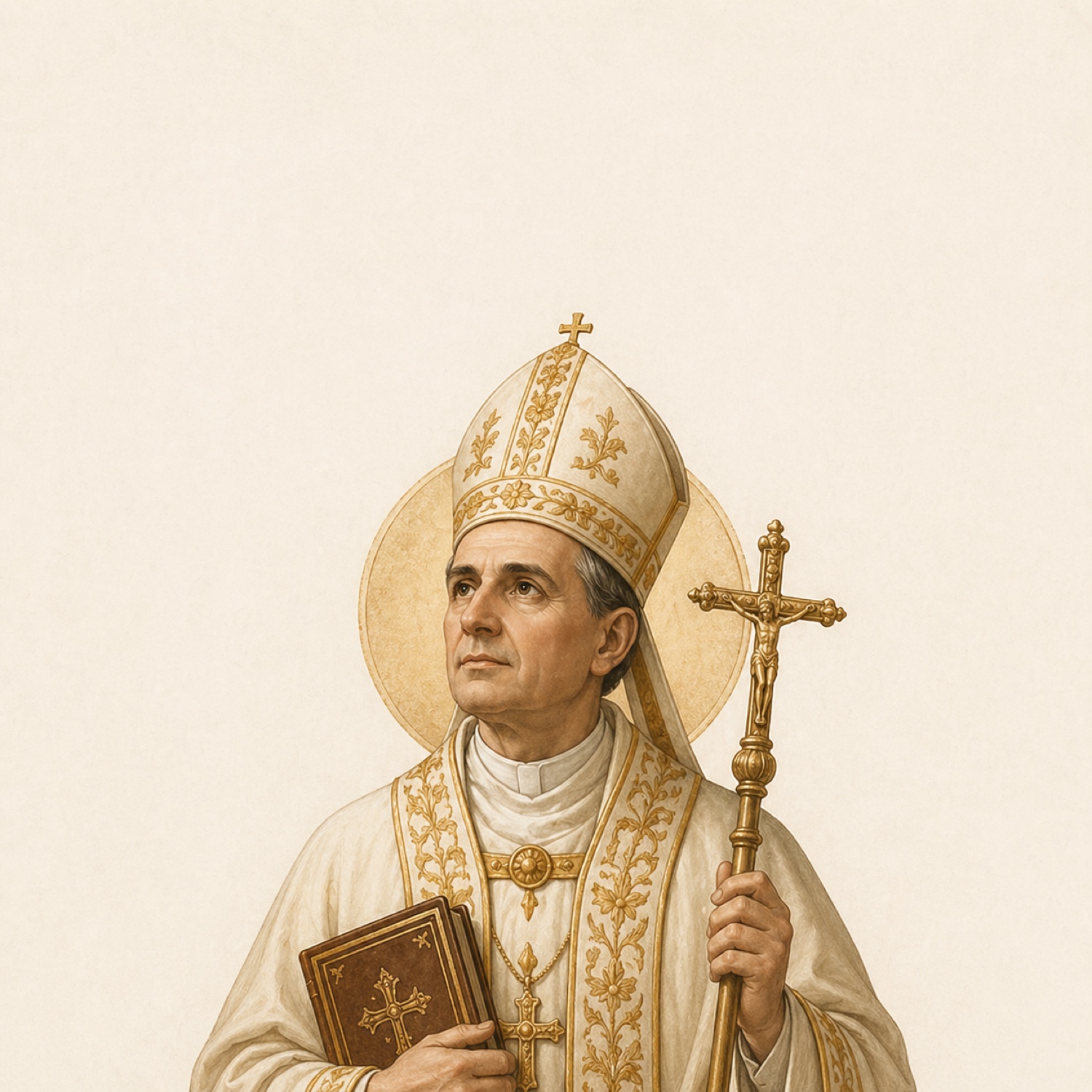
Pope St. Paul VI
Pope of the Second Vatican Council
1897–1978
Giovanni Battista Montini, archbishop of Milan when elected pope in 1963, presided over three of the four sessions of the Second Vatican Council and shepherded the Church through its turbulent reception. He revised the Roman Missal, became the first pope in modern times to travel beyond Italy, addressed the United Nations, and wrote the encyclical Humanae Vitae on the transmission of human life.
Born in Concesio near Brescia to a prominent Catholic family, Montini was ordained in 1920 and spent three decades in the Vatican's Secretariat of State, becoming one of its most trusted diplomats. As archbishop of Milan from 1954, he threw himself into pastoral work among the industrial workers of northern Italy, earning a reputation as a bridge-builder between the Church and the modern world. He was widely seen as the candidate of John XXIII's reforming spirit.
The latter years of Paul VI's pontificate were marked by suffering — the crisis following Humanae Vitae, the upheaval of 1968, and the murder of his friend Aldo Moro. He offered his own anguish for the Church and refused to resign, carrying his cross to the end. He died on the feast of the Transfiguration in 1978 and was canonized by Pope Francis in 2018, recognized as a pope who guided the Church through one of its most difficult passages with faith, patience, and quiet courage.
Sources

Metanoia
A quiet daily companion that takes today's Mass readings and reflects them back through what you're actually living.