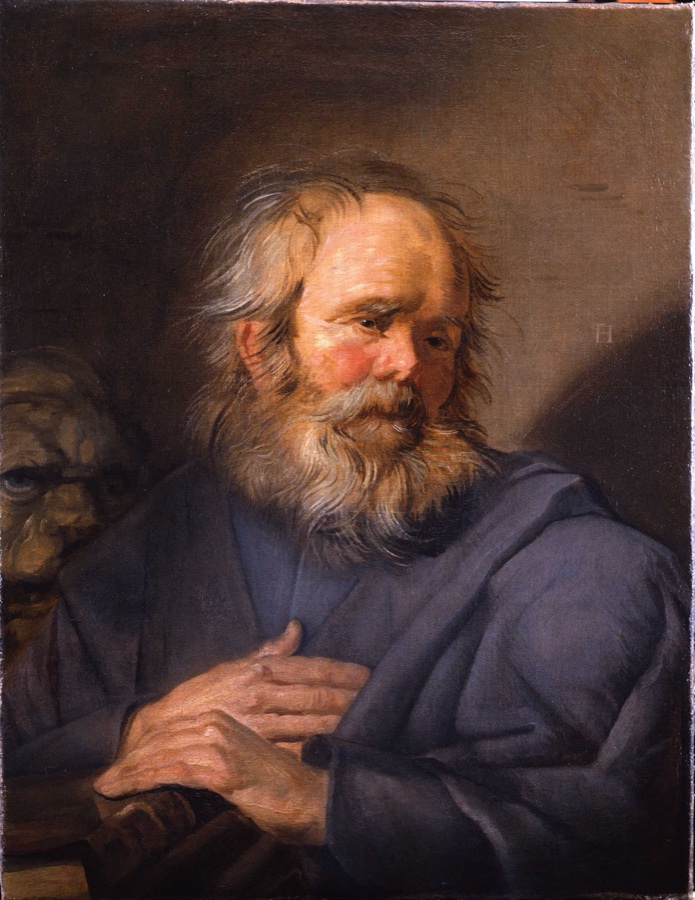
St. Mark
Evangelist, Patron of Venice
1st century
A young Jew of Jerusalem whose mother's house in Acts 12 was a meeting place for the early Church. Mark traveled with Paul and Barnabas, then became the close companion of Peter, whose preaching forms the basis of the second Gospel — the shortest, fastest-moving, and most dramatic of the four. Tradition makes him the first bishop of Alexandria, where he was martyred. Venice, having stolen his relics in 828, made him its patron.
His Gospel begins without a nativity or genealogy — plunging immediately into the ministry of John the Baptist and the baptism of Jesus. Its urgency is unmistakable: the word "immediately" appears over forty times, propelling the reader toward the cross as if nothing else in the world mattered.
Mark's foundation of the Church in Alexandria made Egypt one of the great centers of early Christianity, producing theologians like Clement, Origen, and Athanasius. His symbol is the winged lion, and the Lion of St. Mark still flies on the flag of Venice — a testament to the enduring hold of an evangelist who wrote the shortest Gospel but told the most gripping story.
Sources
Frans Hals, c. 1625 — public domain · Wikimedia Commons

Metanoia
A quiet daily companion that takes today's Mass readings and reflects them back through what you're actually living.