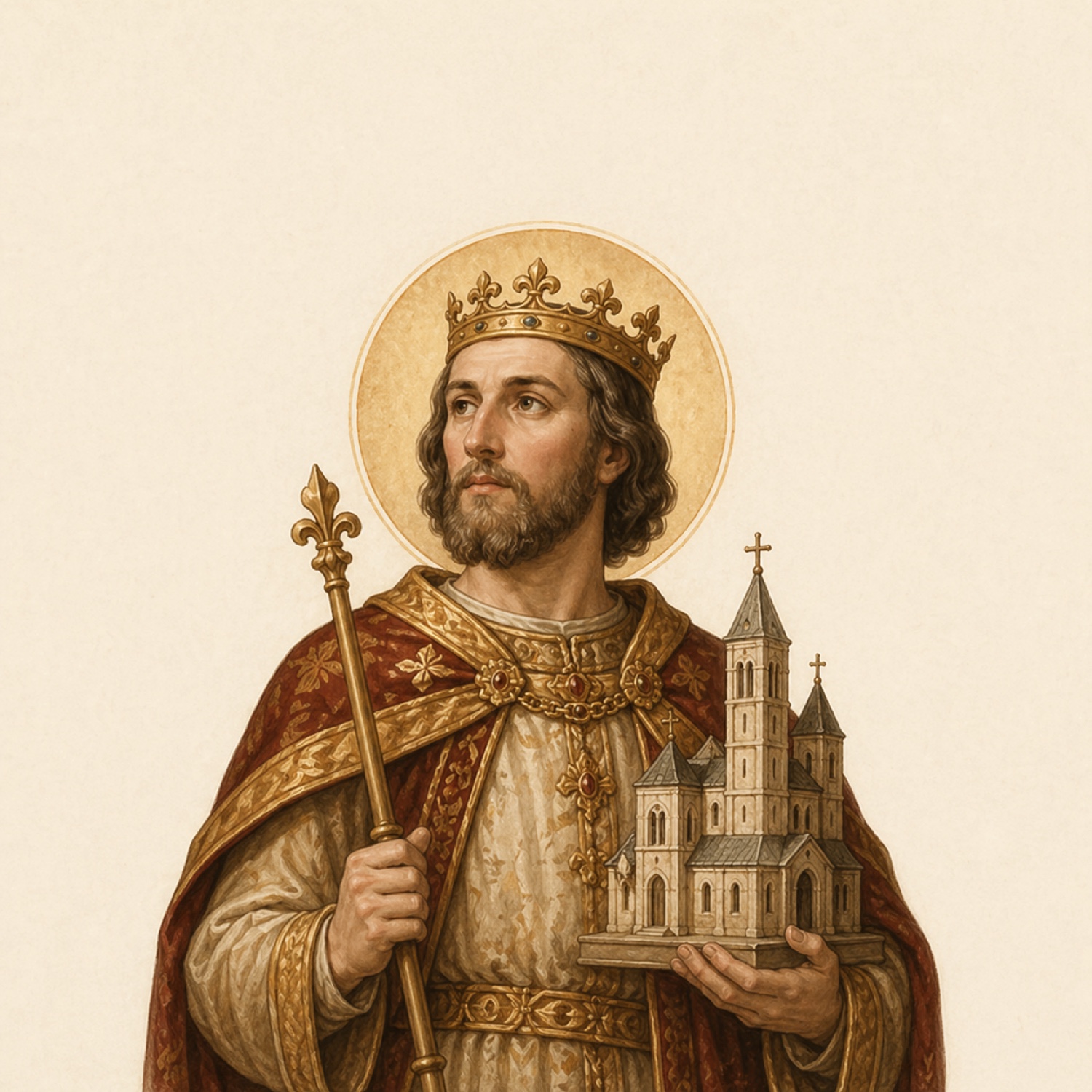
St. Henry II
Holy Roman Emperor
973–1024
A Bavarian duke who became Holy Roman Emperor in 1014, Henry founded the diocese of Bamberg and its splendid cathedral, supported the reform movement of Cluny, and ruled as a just monarch deeply attentive to the affairs of the Church. He and his wife Cunigunde, also canonized, are buried side by side at Bamberg.
Born in 973, Henry inherited the duchy of Bavaria before being elected King of Germany in 1002. Unlike many rulers of his age, he saw temporal power as a trust held for the service of God. He convened synods, enforced clerical discipline, and personally endowed monasteries and churches across his realm, earning the confidence of reformers and bishops alike.
The legend of Henry and Cunigunde's virginal marriage — whether historical or hagiographic — expresses the medieval conviction that holiness can inhabit the highest throne. He died in 1024, the last of the Ottonian dynasty, and was canonized in 1146. His cathedral at Bamberg, with its famous Rider and the tomb of the imperial couple, remains one of the great monuments of Christian Europe.
Sources

Metanoia
A quiet daily companion that takes today's Mass readings and reflects them back through what you're actually living.