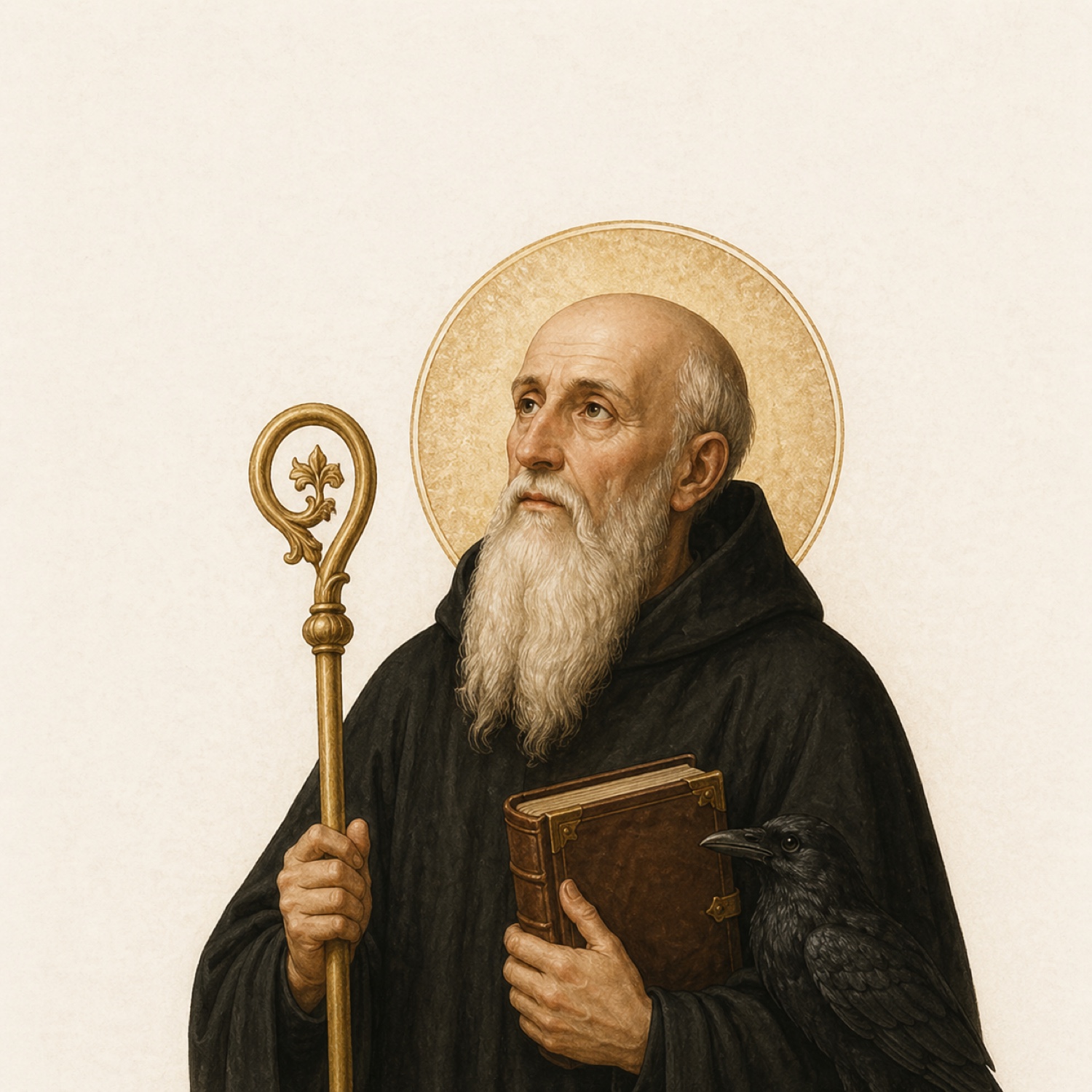
St. Benedict of Nursia
Abbot, Patron of Europe
c. 480–547
A young Roman who fled the corruption of the city to live as a hermit in a cave at Subiaco, Benedict gathered disciples and founded the great monastery of Monte Cassino around 529. His Rule — "ora et labora," pray and work — gave Western monasticism its definitive form and preserved learning, agriculture, and the Christian faith through the collapse of the Roman world.
The Rule of St. Benedict balanced prayer, manual labor, and sacred reading in a rhythm of life so humane and durable that it became the foundation of nearly every Western monastic order. Benedict's twin sister, St. Scholastica, founded a companion community of women nearby, and the two are said to have met once a year for spiritual conversation.
Pope Paul VI declared Benedict the patron of Europe in 1964, honoring the countless monasteries that kept the lamp of civilization burning through the long centuries of upheaval. He died standing before the altar, supported by his monks, his arms raised in prayer.
Sources

Metanoia
A quiet daily companion that takes today's Mass readings and reflects them back through what you're actually living.